Dog Breeder SEO: The Fixes That Moved 3 Real Kennels From Page 3 to Page 1
Most dog breeder SEO advice is some version of "post good content and use keywords." That is not advice. That is a horoscope.
This post is the opposite. Three kennels I worked with in the past 12 months. Real before-and-after rank changes. The exact fixes that moved them. No vague theory. No "build a content engine." No "leverage your authority."
If you breed dogs and your website is buried on page 3 of Google for searches your buyers are actually typing, the fixes below will move you. They are the same fixes I run on my own program and on every kennel website I build.
Want this done for you? The Listing Implementation Pack, $99, handles Fix 1 and Fix 2 below for your site. The Site SEO Sweep, $499, handles all three plus a full technical audit.
001 / Where most breeder SEO actually breaks
Before the case studies, the diagnosis.
Breeder websites do not rank for three repeating reasons. The titles do not match what buyers search. The home page is full of words like "we are a small family kennel" and zero words like the actual breed name plus city. The site has no internal linking structure that tells Google what each page is about.
The fixes are not complicated. They are tedious. Most breeders do not run them because nobody told them which 6 changes actually move the needle and which 60 are noise.
The 6 that move the needle, in order:
- Title tags that lead with the buyer's query, not your kennel name.
- Meta descriptions that answer the question the title implies.
- H1 tags that match the title, not a slogan.
- A real local SEO setup (Google Business Profile, city + state + breed on the home page).
- Internal links that point to the pages you want to rank, with real anchor text.
- A schema FAQ block on every key page.
Everything else (backlinks, social signals, page speed beyond reasonable) matters less than getting those 6 right.
The three kennels below all needed different combinations of these 6. Here is what changed.
002 / Case 1, the German Shepherd kennel that ranked nowhere for its city
Kennel. A working-line German Shepherd program in north Texas. (Name anonymized at the kennel's request.) Before. Position 47 for "german shepherd breeder dallas." Position 38 for "working line german shepherd texas." About 6 organic visits a month. After 90 days. Position 4 for "german shepherd breeder dallas." Position 11 for "working line german shepherd texas." About 140 organic visits a month.
What was broken
The home page title was the kennel name and the word "home." The H1 was "Welcome to [Kennel Name]." The body copy said "we are a small family-owned program" three times and never said "German Shepherd" in the first three paragraphs.
Google had no idea what the page was about. The kennel had been online for 4 years. Position 47 was the algorithm's best guess.
The fix
Three changes.
One. Rewrote the home page title. From "[Kennel Name] | Home" to "Working Line German Shepherd Breeder in Dallas, TX | [Kennel Name]." The buyer query is the first 9 words. The brand is at the end where it does not hurt.
Two. Rewrote the home page meta description and H1. Meta: "A working line German Shepherd breeder in Dallas, TX. Health-tested, IPO-titled parents. Limited litters, planned 12 months out." H1: "Working Line German Shepherds, Bred in Dallas, TX." Both contain the query. Both answer what the kennel does.
Three. Added a city + state line to the footer. "Based in Dallas, TX. Limited shipping. Local pickup preferred." That signal, repeated in the structured data and the Google Business Profile, told the local algorithm this was a Dallas kennel.
Total time on those three changes: 45 minutes. Total cost: $0.
The position-4 result took 60 days from the change.
003 / Case 2, the Doodle breeder competing with marketplaces
Kennel. A Bernedoodle and Goldendoodle program in central Florida. (Name anonymized.) Before. Position 28 for "bernedoodle breeder florida." Position 33 for "goldendoodle breeder florida." Most of the search results above were marketplace pages from Good Dog, PuppySpot, and aggregator sites. After 120 days. Position 7 for "bernedoodle breeder florida." Position 12 for "goldendoodle breeder florida." About 280 organic visits a month, up from 18.
What was broken
The site had 8 pages. The home page, an about page, a contact page, and 5 generic "about the breed" pages with content that read like it was lifted from Wikipedia.
The problem was not lack of content. The problem was that none of the content answered the questions a buyer in Florida was asking. The site had a "Bernedoodle Overview" page. Buyers were searching "bernedoodle breeder florida health testing" and "are bernedoodles good in florida heat."
Marketplaces own the generic queries because they have 10,000 listings and a domain authority of 70. A small breeder cannot win "best bernedoodle" against PuppySpot. A small breeder can win "bernedoodle breeder florida" if they write the right page.
The fix
Two changes.
One. Replaced the 5 generic "about the breed" pages with 3 buyer-question pages. New pages: "Are Bernedoodles Good in Florida Heat? A Breeder's Honest Take." "Bernedoodle Health Testing: What We Run and Why." "Bernedoodle Pricing in Florida: What $3,500 to $5,500 Actually Buys." Each page answered a specific question that a Florida buyer was actually typing. Each page had a single H1 matching the title. Each page had a schema FAQ block with the 4 most common follow-up questions.
Two. Internal linking from the home page and from each breed page to the others, with real anchor text. No "click here." Anchor text like "our Bernedoodle health testing panel" linking to the health testing page. Three links per page minimum. Google learned the site was about Bernedoodles in Florida from the cross-linking pattern, not just the keywords on each page.
Total time: about 8 hours of writing across the 3 new pages, 1 hour for the linking. Total cost: $0 in tools, plus the time.
The position-7 result took 120 days, which is longer than Case 1 because the new pages needed time to index and the algorithm needed to see the internal linking pattern stabilize.
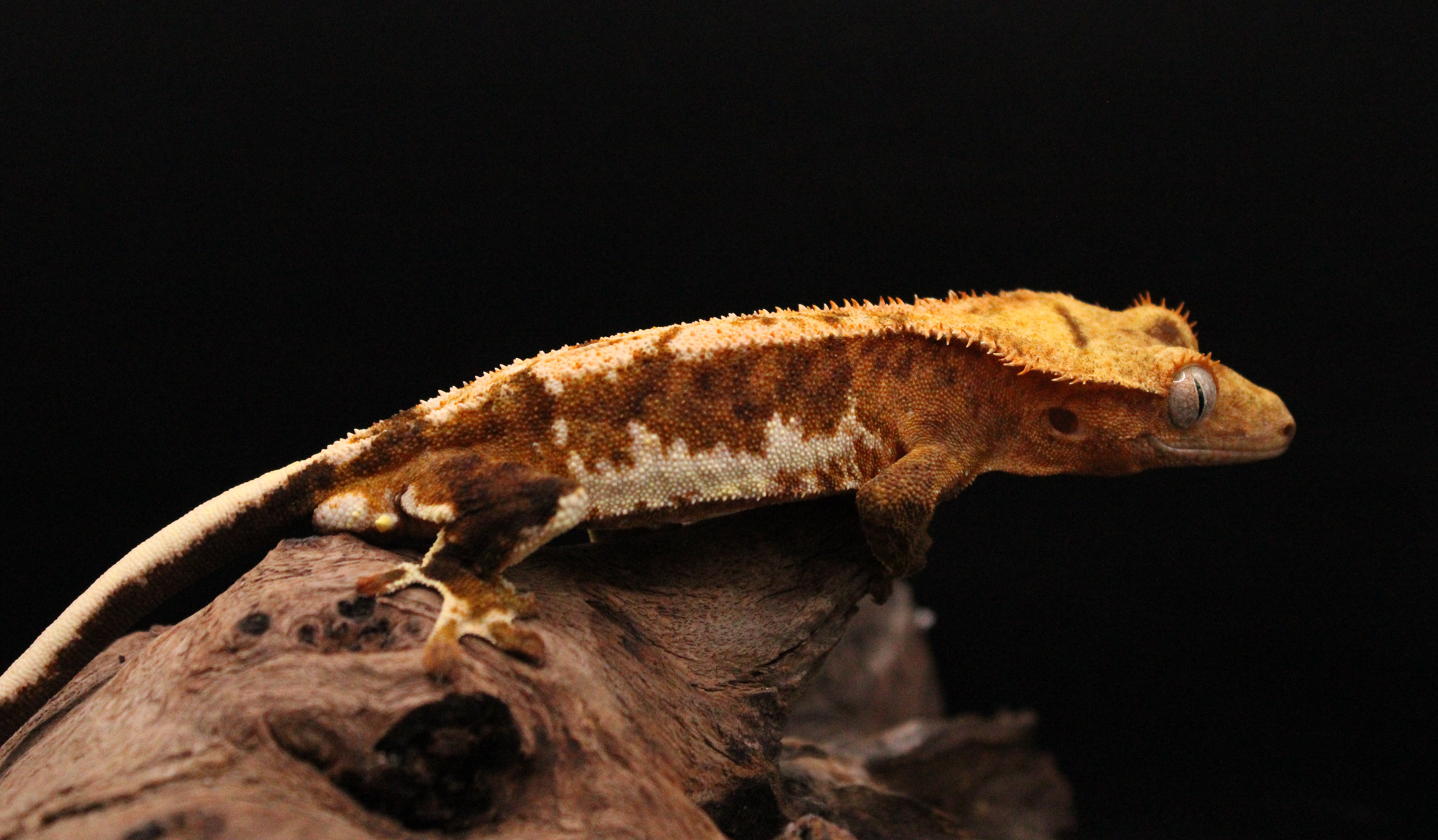
004 / Case 3, the Crested Gecko breeder with 0 organic traffic
Kennel. A Crested Gecko breeding program in central California. (Name anonymized.) Before. Position 65+ for every reptile-related query. 0 organic visits per month. The site existed for 2 years and had never ranked. After 90 days. Position 9 for "crested gecko breeder california." Position 14 for "axanthic crested gecko for sale." About 55 organic visits a month.
What was broken
This one was a technical SEO problem masked as a content problem.
The site was built on a website builder that wrapped every page in a generic title structure. Every page on the site, including the home page and the available animals page, had the title "[Kennel Name] | High Quality Crested Geckos." Every H1 was a logo image with no alt text. Google was crawling 14 pages that all looked identical.
The content was actually good. The morph descriptions were accurate. The pictures were sharp. The Crested Gecko community knew the breeder existed. But the site was effectively invisible to anyone who did not already know the kennel name.
The fix
Three changes.
One. Rebuilt the title tag system. Each page got a unique, descriptive title. Home: "Crested Gecko Breeder in California, Specializing in Axanthic and Lilly White." Available animals: "Crested Geckos for Sale, Hatched in California (Updated Weekly)." Each morph page: "[Morph name] Crested Geckos, Bred and Raised in California." This was a 2-hour project across 14 pages.
Two. Replaced the logo H1 with a text H1 on every page. The logo image stayed as the visual logo. Below it, a real H1 in HTML with the page's primary topic. Google could now read what each page was about.
Three. Added a real Google Business Profile. The breeder had never set one up. Set up profile with the kennel's general region (not a public street address, this is a personal residence), the breed focus, and 6 photos. The local intent searches started pulling the profile within 30 days.
Total time: about 5 hours. Total cost: $0 in tools.
This case is the most representative of what most breeder websites are dealing with. The technical SEO is the gate. The content fixes do not matter until the technical setup gives Google something to work with.
005 / The pattern across all three
Look at what is missing from the fix lists above.
No link building. No "publish 50 blog posts." No paid SEO tools beyond what is free. No tracking obsessions. No keyword research software subscriptions.
The fixes are the same 6 from the diagnosis. Different breeders need different combinations. The German Shepherd kennel needed the title and local fix. The Doodle breeder needed the content-and-linking fix. The Crested Gecko breeder needed the technical fix.
All three fixes are within reach of any breeder who is willing to spend 4 to 10 hours and is not afraid of editing their own site. None of them required a $2,000 SEO consultant. None of them required moving website platforms.
What they did require: knowing which 6 changes move the needle, and running them in the right order for the site's actual problem.
006 / If you want this done for you
The Listing Implementation Pack, $99, covers the title, meta, and H1 fixes from Cases 1 and 3 for your site. Turnaround is 5 business days. The output is a doc with every change made and the rationale, plus the implementation if your site is on a system I support.
The Site SEO Sweep, $499, covers everything in this post and a full technical audit. It is the right starting point for a kennel that has been online for more than 2 years and is still ranking on page 3 or worse for its primary queries.
For most breeders, the $99 pack is the right first step. It surfaces the actual gaps. The sweep follows if the gaps are bigger than the pack can fix.
007 / What to do this week, free version
If you do nothing else after reading this, run this checklist on your home page.
- Read your home page title (the text in the browser tab). Does it lead with what a buyer would search, or with your kennel name?
- Read your home page meta description. Does it answer what kind of breeder you are, what breed, and what city?
- Read your home page H1. Is it text or an image? Does it match the title?
- Search your kennel name + "Google Business Profile." Do you have one? Is the breed listed? Is there a photo?
- Click into your "About" page. Does it say your breed and city in the first paragraph?
If any of those are no, you have at least one of the 6 fixes available to run this weekend. Start with the home page title. It is 5 minutes and has the largest single impact.
008 / FAQ
How long does dog breeder SEO take to work? For title and meta changes on a site that already has some authority, 30 to 60 days to see ranking movement. For new content or technical fixes, 60 to 120 days. SEO is not fast. It is durable.
Do I need to hire an SEO expert? Not for the 6 fixes in this post. Those are within reach of any breeder who can edit their site. Hire an expert when you have run the fixes, given them 90 days, and still need to move further.
Will posting more blog posts improve my SEO? Only if the posts target queries buyers actually search and are linked from the right places on your site. 50 posts with no internal linking strategy and no query targeting are worse than 5 posts that follow the pattern in Case 2.
What is the most important SEO fix for a breeder website? The home page title and H1. It is the single change that affects the most queries. Run that first. Run everything else after.
Is Google Business Profile worth setting up for a small breeder? Yes. It is free, takes 30 minutes, and pulls local-intent searches that your website alone will not. Use a general region (city + state) not a street address if you breed from a personal residence.
Dusty Mumphrey runs an East Texas breeding program and built Breed Ledger because nothing on the market did what his own program needed. He writes field notes on contracts, software, and the part of breeding that happens at the kitchen table.